What Storm Damage Repair Involves
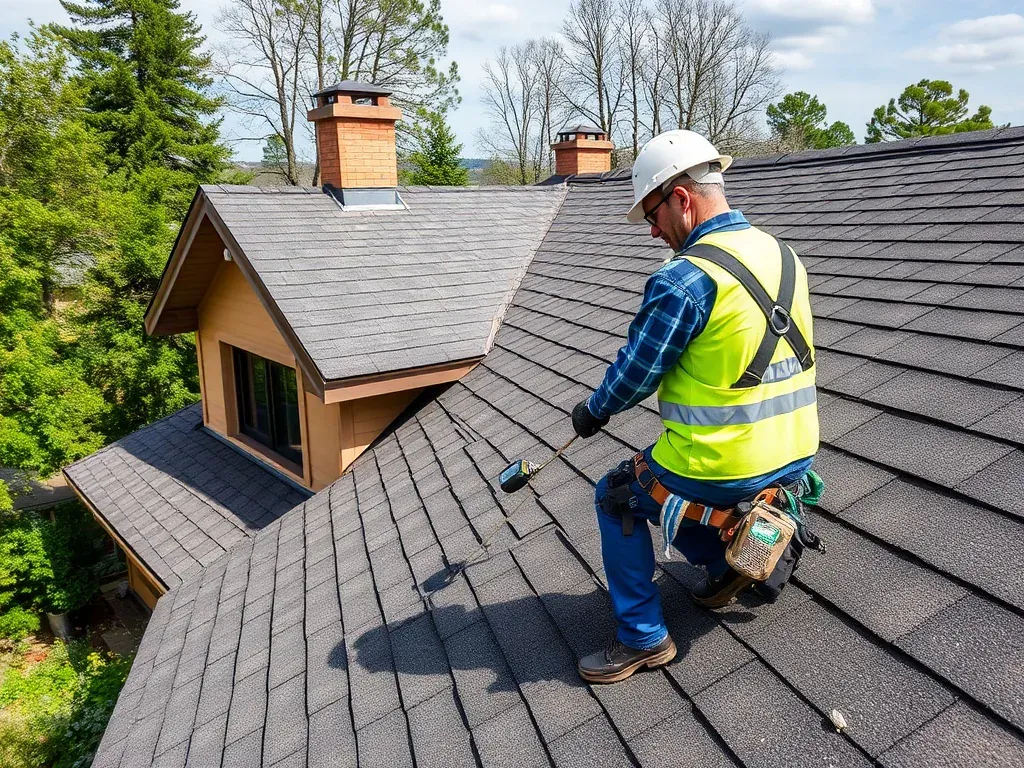
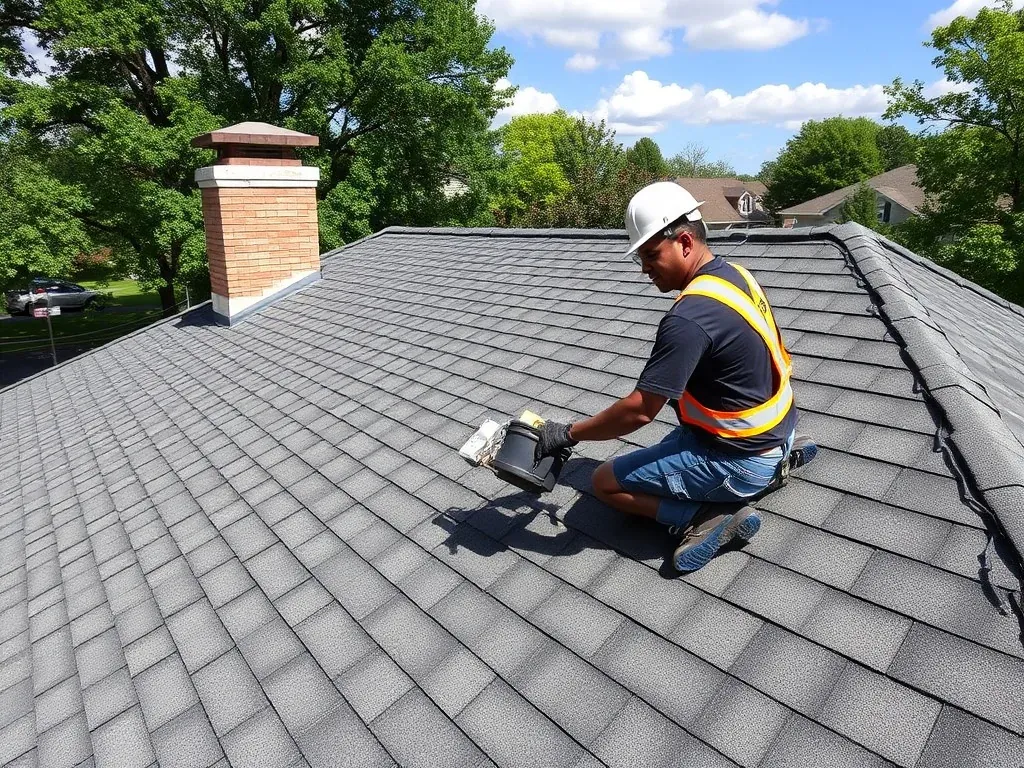
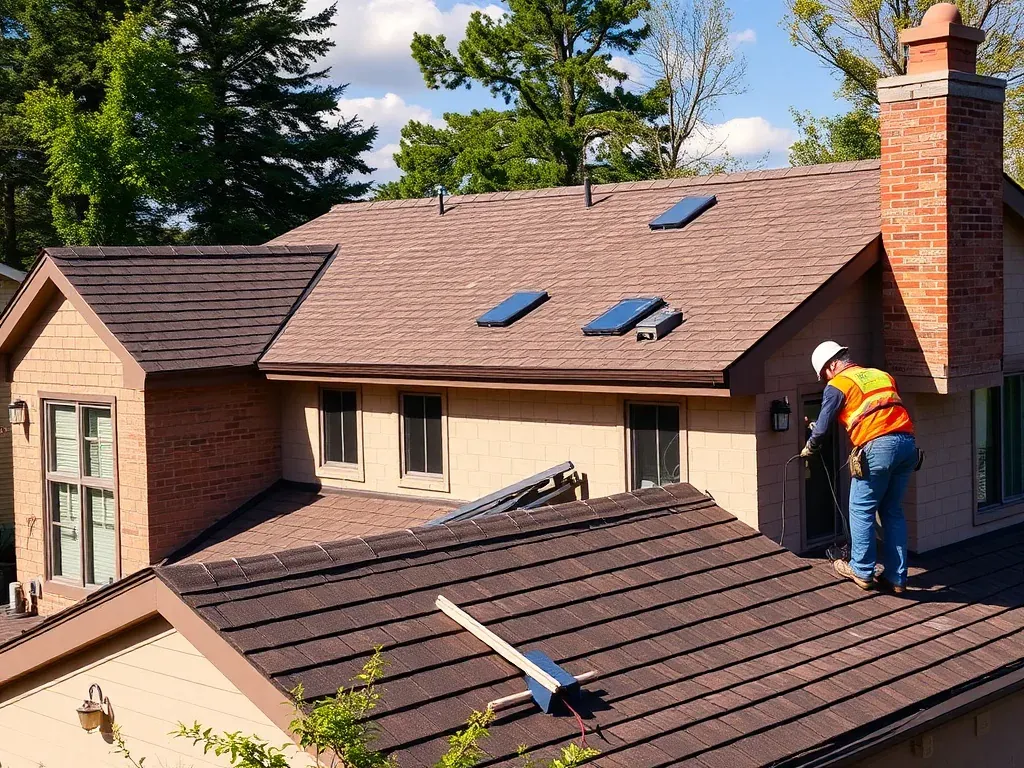
Storm work starts with stopping water. A rapid damage inspection tells us whether hail bruised the shingle mat, whether wind broke the seal strip, or whether rain found a gap at the flashing. Then we cover the roof with tarps and rebuild what the storm took.
- Hail impact dents reduce granule coverage permanently, so matching an impact-rated architectural shingle to your existing field course matters more than the color.
- Wind uplift separates shingles from the roof deck along the ridge, rake, and gable end, which is where we check fastener pull-through first.
- Driven rain wicks past step flashing, chimney flashing, and a dried pipe boot, then seeps into the sheathing and insulation underneath.
- Intense rain penetrates compromised flashing and seals, and the same water erodes the bead of caulk at counter-flashing and apron flashing.
- Thermal shock from extreme temperature swings cracks shingles and can spall the face of a clay tile or slate roof.
- Freeze-thaw cycles let an ice dam build at the eave, where ice pushes water under the drip edge and past the ice-and-water shield.
Signs You Need Storm Restoration
Most homeowners call after they see something inside the house, not on the rooftop. These are the signals that usually mean the roof, not the ceiling, is the real problem.
- Granules collecting in the gutter and downspout, which means the asphalt is shedding its top layer faster than it should.
- Missing or curled three-tab shingle tabs along the rake and eave after a wind event.
- Water stains on a ceiling below a valley, skylight, or dormer, where water travels sideways before it drips.
- Daylight visible through the roof deck in the attic, a sign the plywood or OSB sheathing has cracked or pulled off the truss.
- Dents on a metal panel, ridge cap, vent boot, or fascia that look like someone tapped the surface with a golf ball.
- Torn soffit or fascia and debris sitting on the rooftop after high winds pushed through the neighborhood.
- Loose or missing chimney flashing and counter-flashing, where the most expensive leaks in older homes begin.
How Our Storm Restoration Process Works
Any roofer can climb a ladder. The order below is what keeps one repair from turning into a second claim.
- Rapid damage inspection within hours of your call, photographed before anything on the roof moves.
- Emergency tarping and board-up when the roofline is open, using weighted tarps that hold through the next front.
- A line-item estimate built in Xactimate and a scope your insurance claim can be measured against.
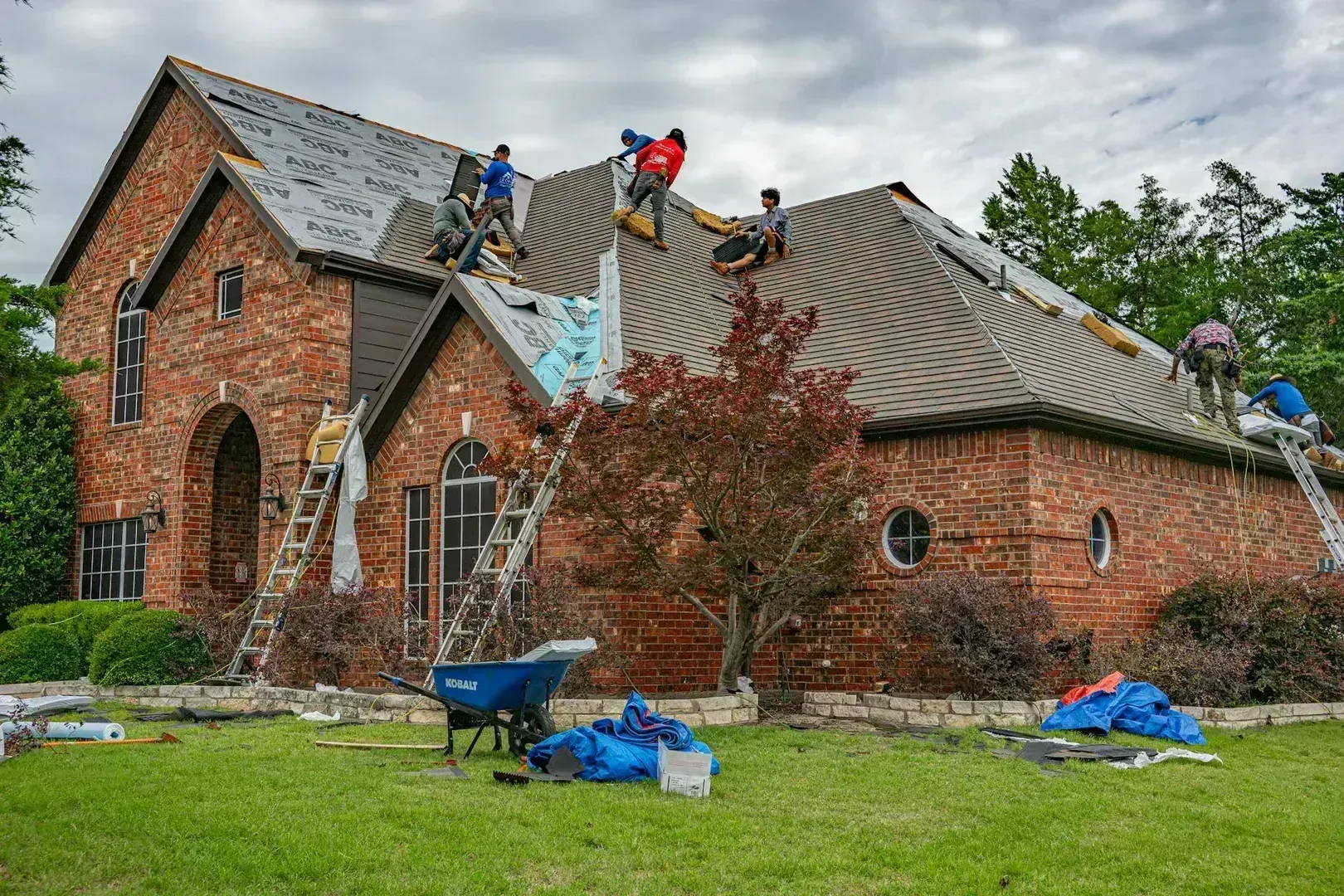
- Tear-off of the failed field course and starter course, decking replacement wherever rot, decay, or sag shows in the plywood or OSB substrate, then haul-off into a dumpster.
- Rebuild with self-adhered ice-and-water shield in the valley and at the eave, synthetic underlayment across the field, then drip edge and flashing.
- Finish work in staggered courses with ring-shank nails, a new ridge vent and ridge cap, fresh sealant, and a magnetic sweep for nails.
We set scaffold and ladder where the pitch is steep, tie off on a safety harness, and run a nail gun off an air compressor. A roofing square keeps courses straight. A torch comes out only for modified bitumen, never on shingle, and metal panels get screws set to the right depth.
Roofing Materials We Inspect After a Storm
Hail and wind do not treat every roof the same way. What we look for changes with the material already on your home.
- Architectural shingle and three-tab shingle, the most common cover in Dallas County, where hail bruising shows as a soft spot in the mat.
- Wood shake and cedar shake, which split, curl, and hold moisture long after the rain stops.
- Slate and clay or concrete tile, where impact can crack the material even when the surface still looks intact.
- Metal panel, standing-seam panel, and corrugated panel, where hail leaves dents that break the finish and start corrosion.
- Low-slope sections over a porch or garage, where a TPO, EPDM, or PVC membrane takes the hit instead of shingle, or an older built-up roof and modified bitumen assembly with roofing felt, tar paper, or bitumen surfacing that has begun to alligator.
Components and Details That Fail First
Water is patient. It finds the one detail the storm loosened, then wicks through the assembly for months before you see a stain.
- Flashing details: step flashing at a sidewall, chimney flashing, counter-flashing, apron flashing, and boot flashing around pipes.
- Roof edges: the drip edge at the eave and rake, the valley where two planes meet, the hip and ridge cap, and the verge at a gable.
- Drainage path: the gutter, the downspout, the fascia it hangs on, and the soffit and soffit vent behind it.
- Structural layers: roof deck, plywood or OSB sheathing, the substrate below them, and the truss, rafter, joist, ridge beam, purlin, batten, and counterbatten.
- Openings: a skylight, dormer, or chimney, and on a flat addition a parapet, scupper, or coping edge.
- Attic side: insulation, ventilation, an attic fan, and the vapor barrier, which decide whether a small leak becomes a mold problem.
- Sealants and finishes: mastic, roof cement, adhesive, caulk, a reflective coating, and anchor points for a snow guard.
- Awkward shapes: a mansard, gambrel, canopy, or awning roof, plus any deep overhang that hides the eave from the ground.
Every repair ends with waterproofing and weatherproofing checks at each of those points, not just the one that leaked.
What Storm Restoration Costs in Dallas
Most hail and wind claims land in a predictable range, and the insurance scope usually sets the final number. These are the figures we see on Dallas County homes.
- A single-slope repair with replacement shingles, underlayment, and flashing runs about $450 to $1,200.
- Rebuilding a valley, chimney flashing, or a torn boot flashing usually lands between $350 and $900, depending on access.
- Decking replacement with new plywood adds roughly $75 to $150 per sheet once the old sheathing comes up.
- A full roof replacement, when damage covers more than a quarter of the roof, is priced per square and is normally covered by the claim.
- Emergency tarping is often a separate line item and generally costs a few hundred dollars.
Warranty and Insurance Claims After Hail or Wind
Texas gives homeowners a fair shot at a storm claim, but the paperwork decides how much of it you actually collect. We document damage the way an adjuster expects to read it.
- We photograph each slope, mark hail strikes on a test square, and write the scope as Xactimate line items.
- We meet the adjuster inspection on the roof and answer questions while the damage is still visible.
- We file a supplemental claim when the first scope misses decking, flashing, or code-required items.
- We register the manufacturer warranty on the materials we install, so coverage transfers if you sell.
- Our own workmanship warranty covers the installation, separate from the shingle warranty.
- Repairs covering more than 25% of the roof area need a permit under local building code, and we pull it.
Why Dallas Roof Master Works Dallas County
Dallas County sits in the middle of hail alley, and roofs here take a beating most springs. Hail in May, UV through August, and a tornado-driven wind event every few years all leave marks that look minor from the ground.
We work the corridors off I-635, I-30, and US-75 (Central Expressway), so a call near Dallas Love Field Airport gets the same response as one from the middle of the county.
When we tore off a hail-bruised roof on a 1950s ranch, the decking under the ridge was rotted through three sheets. The homeowner never saw it from the yard. That job is why we pull a test square before quoting any storm repair. And a storm-chasing roofing contractor who knocks on your door after a hail event is usually gone by the time the second rain hits.
Signs You Need Storm Damage Repair
Granules in the Gutter
Hail impact dents reduce granule coverage permanently, so the asphalt mat starts drying out. If you sweep a handful of grit off the downspout after a spring storm, the shingle is already thinner than it was.
Curled or Missing Tabs
Wind uplift separates shingles from the roof deck along the rake and gable ends. Curled three-tab shingle tabs rarely reseal on their own after a strong spring gust.
Water Stains on the Ceiling
Rain drives sideways into step flashing and chimney flashing during a Dallas squall. The stain usually shows up feet away from the actual gap, so we trace it with a roof inspection instead of a guess.
Visible Dents or Bruising
Hail strike marks show as soft spots on an architectural shingle and as dents on a metal panel or ridge cap. Both break the surface that keeps water out.
Daylight Through the Decking
Thermal shock from extreme temperature swings cracks shingles and can crack the plywood or OSB sheathing under them. If you see daylight from the attic, water is already getting through.
Ice Dams at the Eave
A hard freeze after rain lets an ice dam form along the eave and push water under the drip edge. North-facing slopes in Dallas County see this more than homeowners expect.
What's Included
- ✓ 24-hour response and emergency tarping to stop water before it reaches your ceiling
- ✓ Free roof estimate and inspection with photographs of every damaged slope, valley, and flashing detail
- ✓ Written damage documentation formatted for your insurance carrier and the adjuster's scope
- ✓ Board-up and debris removal when wind or a fallen limb opens the structure
- ✓ Replacement shingles, ice-and-water shield, and replacement decking matched to your existing roof
- ✓ Follow-up permanent repair scheduled once the claim is approved and materials arrive
- ✓ Magnetic nail sweep of the yard and driveway before we pull the dumpster
Related Services
Ready to get started? Call us today at 2142865623 for a free estimate.
☎ Call 2142865623