What Insurance Claim Assistance Involves
This work is documentation, not salesmanship. We record what the storm did to your roof, price it the way carriers price it, and stay in the room when the adjuster walks the slope with you.
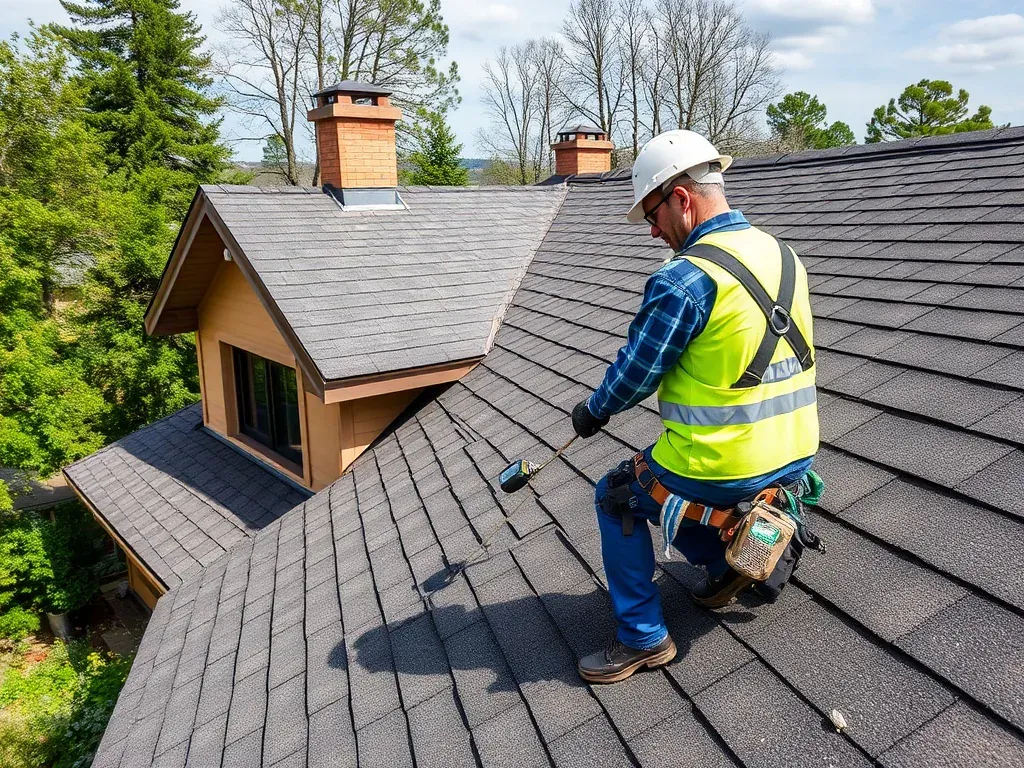
- Claim documentation begins with a full roof inspection of every slope, valley, and penetration, not just the side facing the street.
- We write the roof estimate line by line in Xactimate scope documentation, the same platform most carriers use to build their own numbers.
- ITEL shingle sampling sends a cut sample to a lab when an adjuster questions whether your asphalt shingle is still manufactured.
- Drone photo packages capture steep pitch, second-story rooflines, and metal panel runs that are not safe to walk after rain.
- A HAAG-certified inspector reads hail damage on soft metals such as pipe boot collars and gutter aprons, which often dates the storm.
- We track deductible, depreciation, and replacement cost, so you know your real out-of-pocket number before you sign a contract.
- When a scope of work leaves something out, we file a supplement backed by photographs rather than argument.
- Emergency tarping counts as mitigation, and most policy coverage will reimburse it when the paperwork is right.
Signs You Need This Service
Storm damage rarely announces itself on a Dallas roof. Here is what we find the week after hail moves across Dallas County.
- Granule loss shows as coarse sand in the gutter and at the mouth of every downspout, which means the shingle surface is eroding.
- A bruised shingle mat feels soft, and that dent holds water until it wicks into the underlayment and rot starts in the decking.
- Hail damage on a ridge cap or vent boot reads as a dented, shiny spot long after the surrounding field course looks fine.
- Wind damage lifts the rake, the verge, and hip shingles first, because those edges take the full force of a tornado-driven gust.
- Brown rings on a soffit or an eave mean water is already past the ice-and-water shield and into the eave framing.
- A quick tarp stops the leak, but document the damage underneath first or the carrier prices only what it can still see.
- Summer UV makes old sealant flake and caulk peel at step flashing, and that gap is where the next leak seeps in.
Roofing Materials and Assemblies We Document
A Dallas roof can be one of several assemblies, and the claim has to name the right one. We record what is actually up there, layer by layer.
- A three-tab shingle roof records differently from a thicker architectural shingle, though both are asphalt-based and bruise the same way.
- Wood shake and cedar shake need a different eye, since splitting and decay read as age rather than impact.
- Slate, clay tile, and concrete tile crack under hail, and a broken tile often hides torn underlayment beneath it.
- Standing-seam panel and corrugated panel dent at the pan, and cosmetic dents on a metal panel are still recoverable damage.
- TPO, EPDM, and PVC membrane roofs on commercial buildings fail at the seams, which is where an adjuster starts looking.
- Built-up roof and modified bitumen surfaces blister and alligator, and those blisters hold water long after a storm passes.
- Tar, pitch, asphalt, and bitumen show up in older assemblies, and each one has its own repair method.
- Felt, roofing felt, and tar paper underlayment sit under older shingle; synthetic underlayment replaces them on a full tear-off.
- A tile or metal assembly may sit on a purlin, batten, or counterbatten grid instead of solid substrate, which changes how a repair gets fastened.
Component-Level Findings That Drive Claims
Carriers pay for parts, not adjectives. These are the pieces we photograph and measure so your file has something concrete to price.
- Drip edge protects the eave edge, and a bent drip edge is one of the easiest hail hits to prove.
- Fascia and soffit stain when water has been running behind the gutter for a season.
- Ridge, ridge cap, and ridge vent take the most UV, so they flake and crack before the field of the roof does.
- Valleys collect debris, and water backing up there can mimic an ice dam even in Dallas heat.
- Step flashing, counter-flashing, and chimney flashing are the three places we find leaks that have nothing to do with hail.
- Pipe flashing around a pipe boot and boot flashing at a vent boot are soft metal, so they record hail dents clearly.
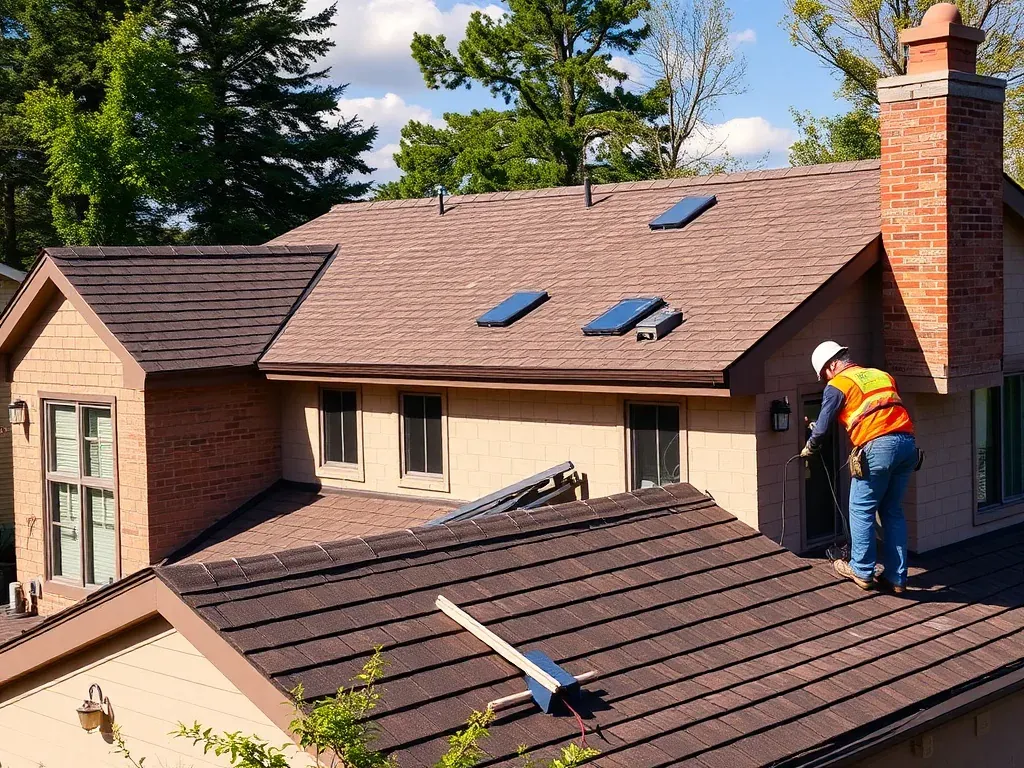
- A skylight or dormer interrupts the plane, and both need their own apron flashing detail.
- A parapet or low overhang lets wind get underneath, and that uplift can loosen coping and a scupper drain on a flat roof.
- The roof deck tells the truth: plywood, OSB, and older sheathing read differently once a truss, rafter, joist, or ridge beam has been wet.
- Fastener choices matter too, since the length of a nail or screw and whether it was hand-sealed with mastic or roof cement changes the warranty.
- A vapor barrier, soffit vent, and attic fan manage attic moisture, and weak ventilation shortens roof life through a Dallas summer.
- Snow guard and anchor hardware are unusual here, but we note them where a mansard, gambrel, canopy, or awning ties into the main roof.
- Waterproofing and weatherproofing details at a gable end or verge get skipped on cheap repairs, and they show up later as leaks.
Our Process, Step by Step
Order matters here. Skip a step and the file gets thin exactly where the adjuster is looking hardest.
- Same-day emergency response and tarping, with board-up if a tree has opened the roof.
- Full roof inspection using moisture meter readings, plus a check of chimney flashing, step flashing, and each boot flashing.
- Claim documentation package: drone photos, measurements in roofing squares, and notes on pitch, roof deck, and fastener type.
- Adjuster meeting on the rooftop, where we point at bruising on a ridge cap instead of describing it in a driveway.
- Supplement filed when the carrier's scope of work omits drip edge, ridge vent, ventilation, or code-required items.
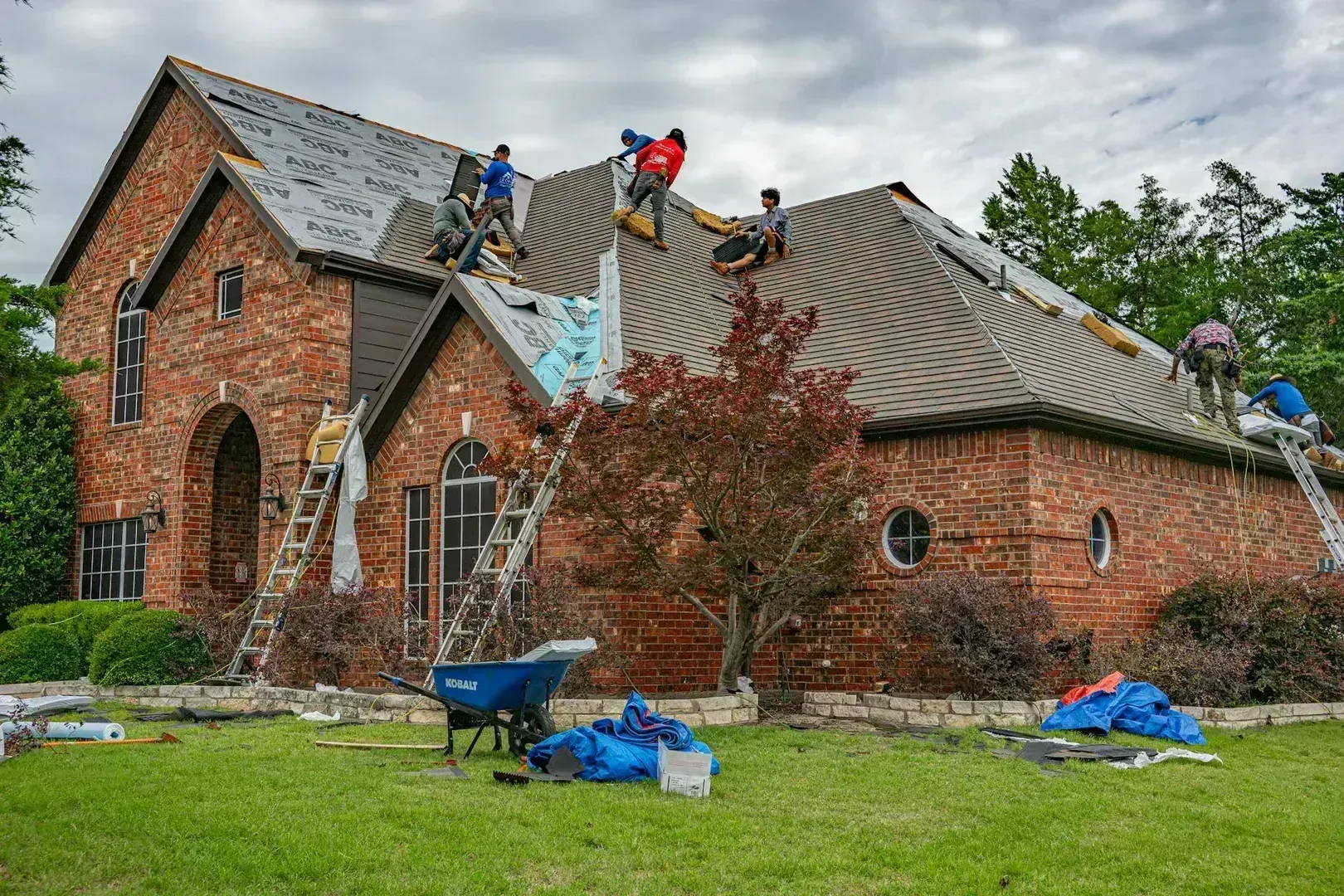
- Permanent repair with a self-adhered ice-and-water shield at the eaves, synthetic underlayment, a starter course, and ring-shank nails in staggered courses.
- Proof of loss and depreciation recovery, then a final walk once the dumpster and debris are hauled off.
On the roof itself, the crew works off a ladder and scaffold with a safety harness above the first story.
A roofing shovel and pry bar strip the old material, then a nail gun and air compressor run the field course.
A roofing square checks exposure and head lap, and a torch only touches modified bitumen details, never shingle.
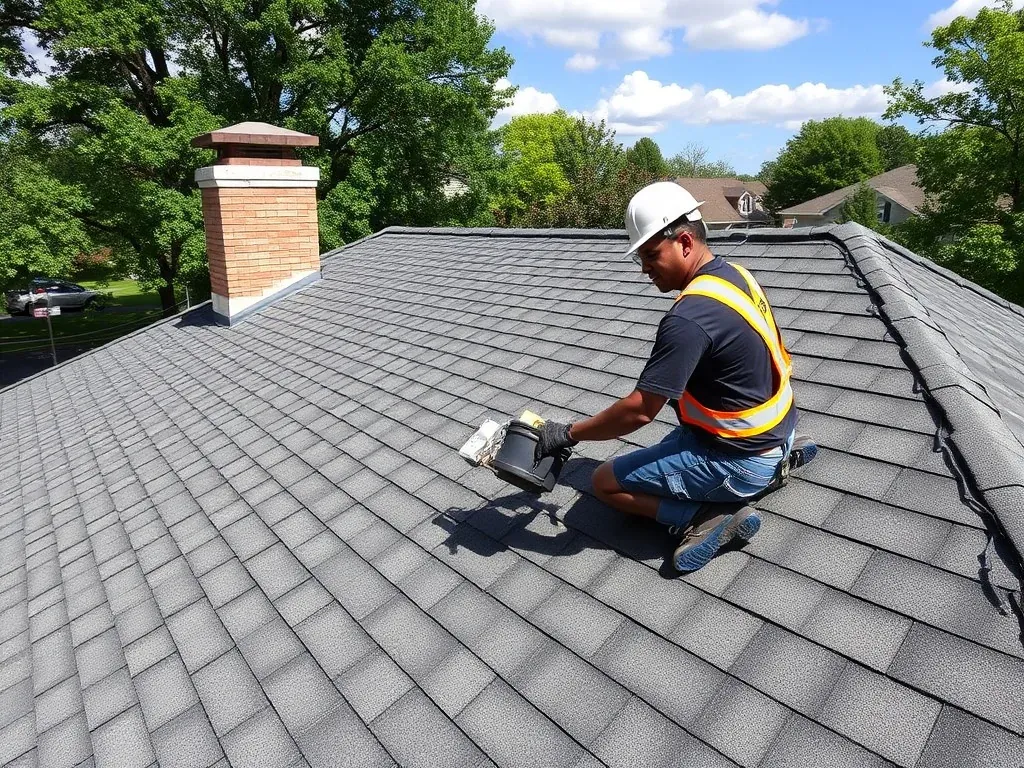
Sealant, caulk, and adhesive finish every penetration, and a roller-applied coating handles flat sections.
Cost Considerations in Dallas
What your policy coverage actually says decides most of this. Two identical roofs on the same block can settle differently, depending on the deductible and the date the storm occurred.
- Your deductible is your fixed share, and in Texas it is often a percentage of the dwelling limit rather than a flat dollar amount.
- Replacement cost coverage pays to rebuild with current materials, while actual cash value pays after depreciation is subtracted.
- Residential work is quoted per roofing square, and Dallas pricing commonly falls in the $350 to $550 per square range installed.
- Pitch, number of stories, and whether the crew does a tear-off or an overlay all move the final figure.
- Commercial flat roofing runs higher per square foot, because membrane, insulation, and drainage details add material and labor.
- Local building code can require upgrades once a tear-off exposes the decking, and those items belong in the claim too.
- Most supplements get filed because the first estimate left out ventilation, flashing, or a required code item.
Warranty & Insurance
Two warranties matter after a storm: the manufacturer's, which covers the material, and ours, which covers how it was installed.
- Architectural shingles usually carry a manufacturer warranty of 25 to 50 years, and we register it in your name.
- Commercial systems may qualify for a no-dollar-limit warranty when the membrane and insulation are installed to specification.
- We stay on the insurance claim from first notice through the final invoice, including reserve release after the work is done.
- Keep your claim number and proof of loss form together, because carriers enforce claim deadlines you do not want to test.
Why Choose Dallas Roof Master in Dallas County
We are a licensed & insured Dallas roofing contractor, and most of our work sits within a few miles of the last job: Highland Park, Lakewood, Preston Hollow, Uptown, and Oak Lawn.
Ranch homes built in the 1950s and 60s around Casa View and the Bishop Arts District often have decking that has been wet before, so we check the substrate before quoting anything.
Spring hail, intense summer UV, and occasional tornado-driven wind treat a Dallas roof differently than the coastal storms you read about.
A good roofer tells you when a mend beats a replacement, and we will say so even when the claim would pay more.
Storm damage claims move on documentation and deadlines. Call 2142865623 and we will get on the roof while the evidence is still up there.
Signs You Need Insurance Claim Assistance
Water Coming Through the Ceiling
An active leak during a spring hail storm means water is already past the underlayment and moving through the decking. A tarp buys time, but the damage underneath has to be photographed before anyone covers it.
Shingles Missing After High Wind
Occasional tornado-driven gusts peel the rake, verge, and hip shingles first, leaving bare felt and exposed fasteners. That open deck takes on the next rain, and the claim needs the stripped area measured in squares.
Tree Impact on the Roof Plane
A limb through the roof opens a hole that no shingle repair will seal from above. We board up, tarp, and document the puncture, the torn flashing, and any rafter damage in the same visit.
Hail Strike Marks on Soft Metal
Dents on a pipe boot, vent boot, and gutter apron are the cleanest proof of a hail date because metal records impact honestly. That evidence often decides whether the carrier approves the claim at all.
Sudden Interior Staining
Brown rings on a ceiling or wall show up days after the storm, once water has wicked through the insulation and vapor barrier. By then the sheathing and a joist may already be wet.
Granules in the Gutters Overnight
Intense summer UV plus hail knocks loose the protective surface, and granule loss shows up as coarse grit at every downspout. Thinning shingle means the mat is next, and end-of-life wear gets priced differently than storm damage.
What's Included
- ✓ Emergency tarping and water mitigation, usually within hours of your call, so the leak stops before the damage spreads.
- ✓ A free roof inspection using drone photo packages and moisture meter readings on every slope and penetration.
- ✓ Damage documentation for insurance written in Xactimate, so your adjuster receives a scope of work in a format they already use.
- ✓ An on-site adjuster meeting where we point out hail damage and wind damage while you are standing on the driveway.
- ✓ Board-up if a tree or flying debris has opened the roof deck above a living space.
- ✓ Supplement filing when the carrier's estimate misses drip edge, ridge vent, ventilation, or a required code item.
- ✓ Follow-up permanent repair and a magnetic nail sweep of the driveway and lawn once the dumpster is gone.
Related Services
Ready to get started? Call us today at 2142865623 for a free estimate.
☎ Call 2142865623