What Emergency Roof Repair Involves
Emergency roof repair is the work of stopping active water intrusion fast: tarping the breach, sealing what can be sealed, and stabilizing the roof until permanent materials go on.
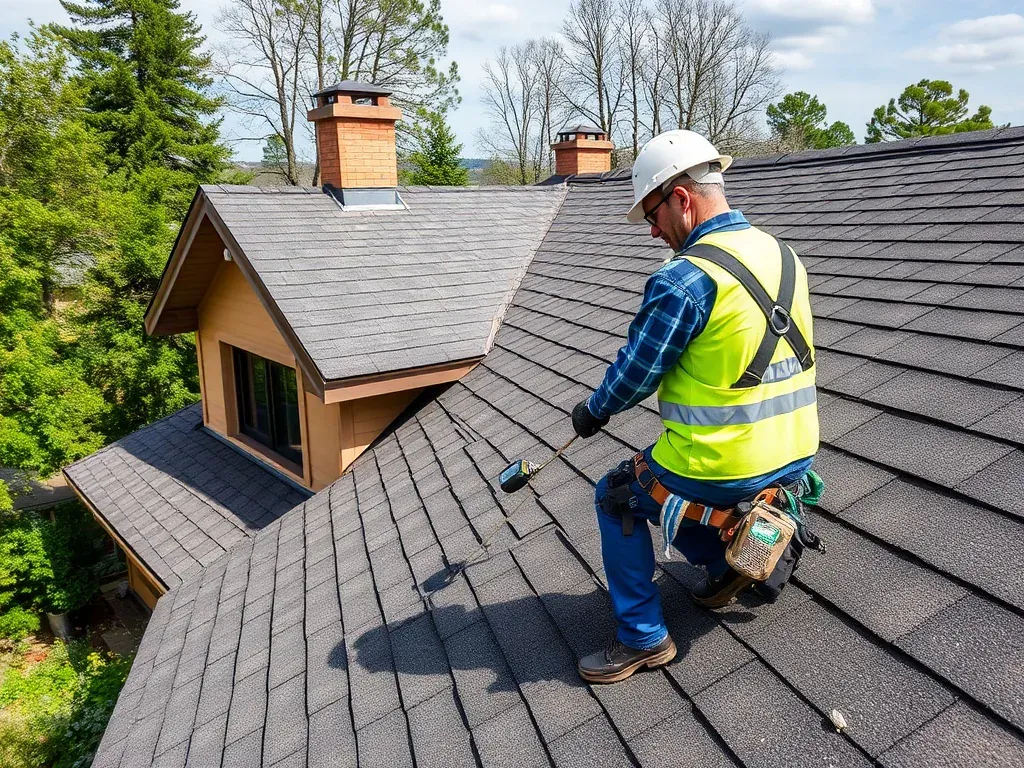
We start with a roof inspection of the rooftop and roofline, then trace the water back to where it actually enters. Wind-driven rain almost never comes in where the ceiling stain shows.
It wicks along a rafter or truss, soaks the insulation, and drips somewhere else entirely. Guessing from the ground wastes a day you probably do not have.
- Emergency tarps anchored over the breach with weighted battens, which keep rain off the decking until the permanent fix goes on.
- Replacement shingles matched to your field course, whether the roof carries a three-tab shingle, an architectural shingle, or a heavier concrete tile or clay tile profile.
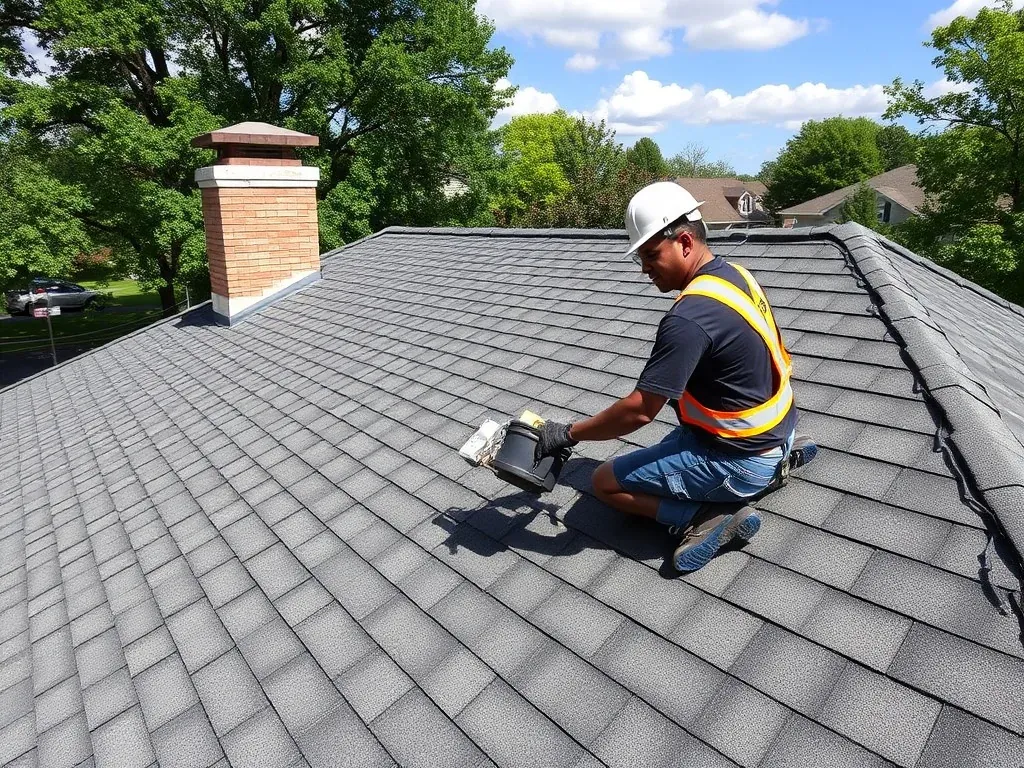
- Sealants and roof cement worked into the pipe boot, pipe flashing, and vent boot, where tired caulk has cracked and pulled away.
- Self-adhered underlayment and ice-and-water shield laid at the valleys and eaves, the two spots most likely to leak again after a repair.
- Decking repair where plywood or OSB sheathing has softened, since covering rot with new shingle buys you one season at most.
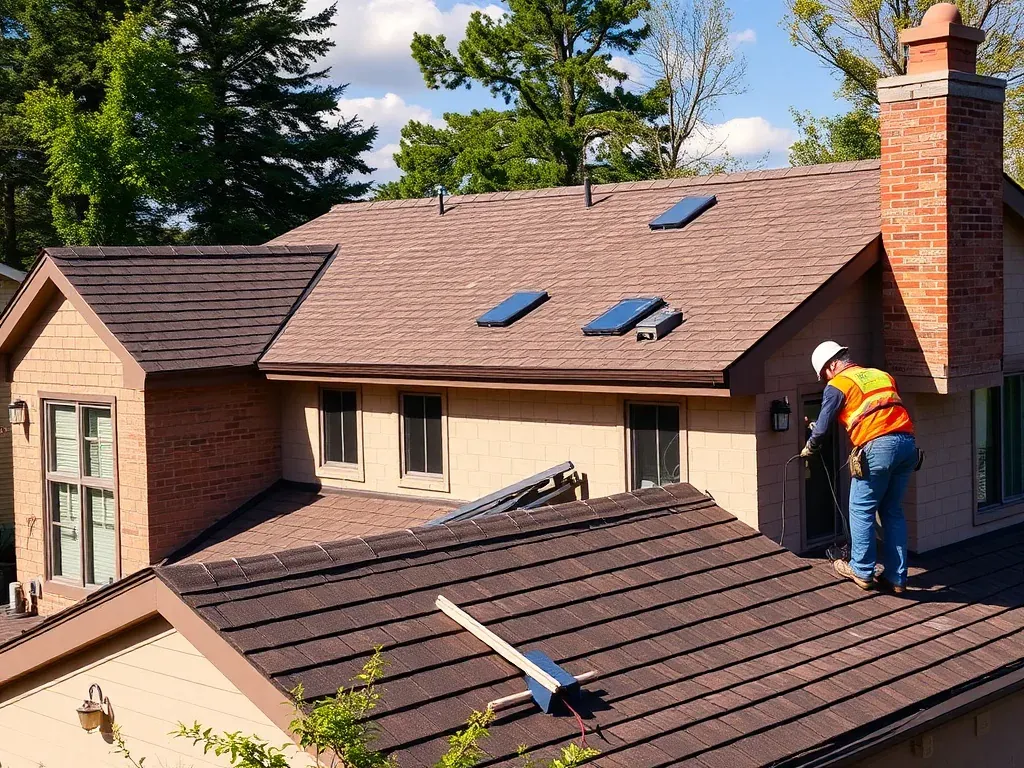
- Flashing work at chimney flashing, step flashing, counter-flashing, and drip edge, because flashing failures cause most of the chronic leaks we see.
Signs You Need Storm Restoration Now
The signs that matter most show up during weather or within a day of it, not on a calm afternoon two weeks later.
- A ceiling stain that appears within hours of a storm points to an active breach, not a slow seep.
- Missing shingle sections after a wind event, with the roofing felt or tar paper showing through underneath.
- A limb resting on the roof deck or through the sheathing. Do not pull it yourself; the puncture is usually wider than the branch.
- Hail strike marks that bruise a shingle surface and knock granules loose around the impact point.
- Debris packed into a valley or behind the chimney, holding water against the flashing instead of letting it drain.
- Gutter and downspout overflow that backs water up along the eave and rots the fascia and soffit behind it.
- Daylight visible through the roof deck from the attic, which means a rafter or joist may be involved.
Our Rapid Response Process
Every call runs through the same order, because skipping a step is how a temporary fix turns into a second claim.
- Call triage: we ask where the water is showing, what kind of roof you have, and whether anyone inside is at risk, then dispatch.
- Rapid response and safety setup: ladder and scaffold placement, with a safety harness on anything steep enough to punish a slip.
- Tarping: emergency tarps, battens, and anchors over the breach, giving you a tarp and temporary repair now and a GAF-certified permanent fix once the weather clears.
- Documentation: photos, moisture readings, and a line-item roof estimate built to match what your carrier will actually review.
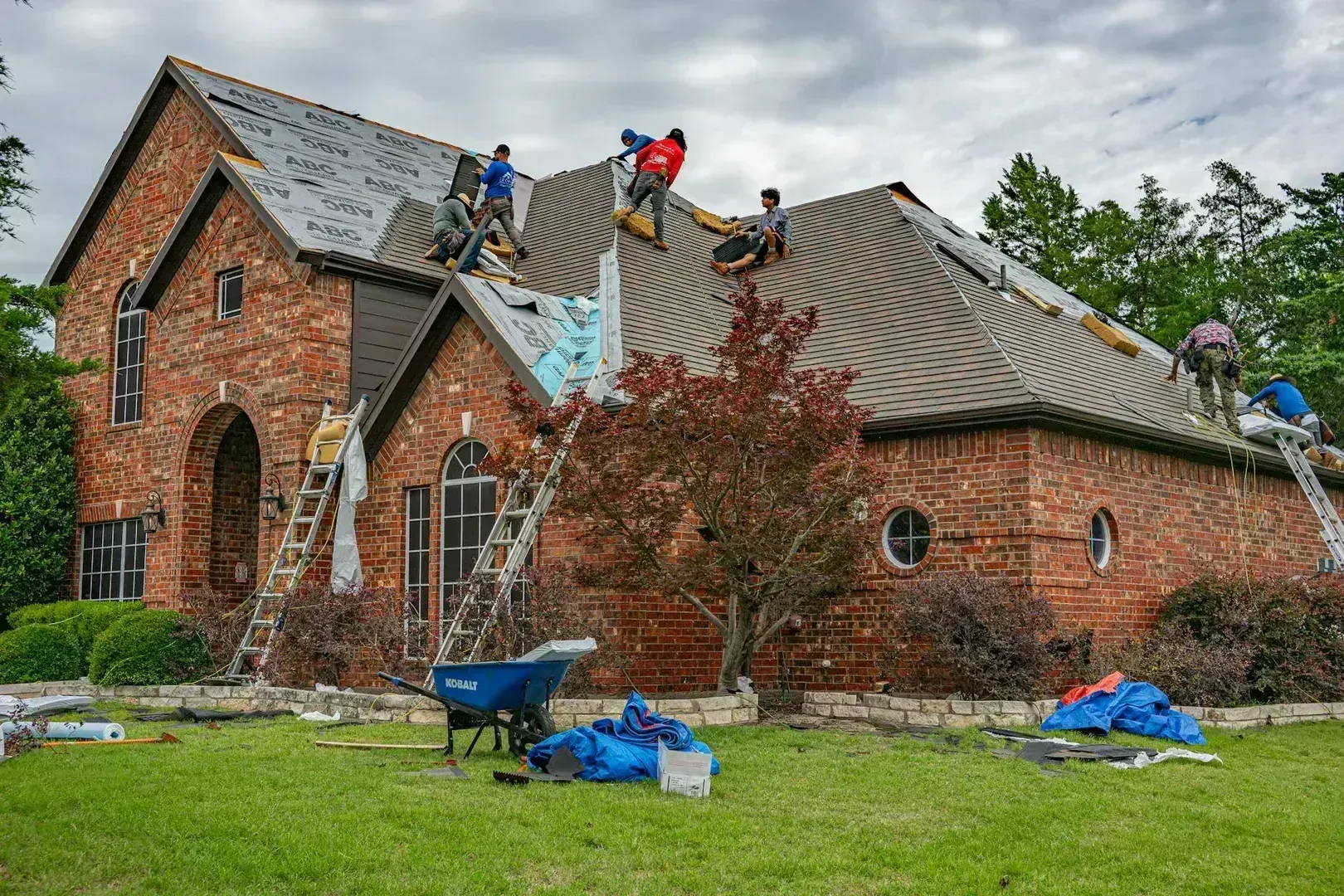
- Permanent repair: tear-off of the damaged square, synthetic underlayment, ring-shank nails, and staggered courses so the new shingles lock into the old field.
- Cleanup: dumpster on site, magnetic sweep for nails and fasteners, gutters cleared of debris.
Hip and gable ends, the rake, the verge, and the ridge cap all get walked before we leave. Any screw or fastener that backed out gets replaced rather than hammered flat.
Our trucks carry a pry bar, roofing shovel, nail gun, and air compressor, so nobody waits on a supply run mid-storm. A torch only comes out for modified bitumen on flat sections.
Cost Considerations in Dallas
Cost depends on how much water got in and how far it traveled, not on how bad the damage looked from the driveway.
- Tarping and temporary weatherproofing usually runs $350 to $900, depending on pitch and how tight the access is.
- A single-section repair, with replacement shingles and new underlayment, typically lands between $450 and $1,800.
- Decking replacement adds cost per sheet when plywood or OSB has to come out, and rot spreads faster than most homeowners expect.
- Full residential replacement is priced by the roofing square, and it depends on whether we recover, overlay, or do a complete tear-off.
- Dallas building code requires permits once structural decking is replaced, and that permit plus the dumpster rental shows up as a line item.
We do not put a number on a roof we have not walked. Free estimates include the roof inspection, and financing is available on larger repairs.
Warranty and Insurance Claims
Insurance is where most homeowners get overwhelmed, so here is the order the claim actually moves in.
- We document the storm date, photograph the damage, and hand you a line-item estimate you can forward to your carrier.
- The adjuster inspection is their visit, not ours, and we are glad to be on the roof at the same time if you want a second set of eyes.
- If the first scope misses decking or flashing, we file a supplemental claim with photos and measurements attached.
- Keep the proof of loss form and any claim deadline in one folder, since a missed deadline is the most common reason a claim stalls.
- Manufacturer warranty terms depend on the whole system, including underlayment, ventilation, and installation, not just the shingle.
Our workmanship warranty is written on the estimate, and we register manufacturer coverage on the materials we install.
Why Homeowners Call Dallas Roof Master
Dallas County roofs take a specific beating: hail most springs, UV that bakes a shingle brittle by August, and straight-line winds that find every loose fastener along the ridge.
We work Highland Park, Lakewood, Uptown, Oak Lawn, Preston Hollow, the Bishop Arts District, Deep Ellum, and Casa View, so we know which blocks pool water at the gutter and which roofs sit over skip sheathing.
Mid-century ranch homes around Casa View and Lakewood run low pitches and short rafter spans. Newer tract homes past I-635 use truss framing that flexes differently under wind uplift.
Historic Craftsman and Tudor Revival houses need original decking respected, not covered. Near US-75, I-30, or Love Field Airport, we are usually on site the same day.
We are a licensed and insured roofing contractor, and the roofer who inspects your roof signs off on the repair.
Roof Types and Materials We Work With
- Asphalt shingle roofs, both three-tab and architectural, dominate Highland Park and Casa View, and they take hail worse than anything else on the market.
- Metal panel, standing-seam panel, and corrugated panel roofs dent under hail but often stay watertight, so a repair may be all you need.
- Wood shake and cedar shake on older homes need spot replacement more often than a full roof replacement.
- Slate and tile roofs are heavy, so we check the purlin, batten, counterbatten, and ridge beam before adding anything to the substrate.
- Flat and low-slope sections use modified bitumen, a built-up roof assembly, or a membrane; TPO, EPDM, and PVC membrane belong on commercial roofing, not a shingle house.
- Dormers, skylights, and mansard or gambrel rooflines create valleys and transitions where waterproofing has to be exact.
- A ridge vent, soffit vent, attic fan, vapor barrier, and roof coating all affect how the roof performs after the repair, so we check them rather than assume.
- Small features count too: a canopy, awning, chimney, parapet, or overhang interrupts the roof plane, and a scupper or coping on a commercial deck is its own leak source.
Old tar patches tell us where the last leak was and whether anyone ever found it. We reseal boot flashing with mastic backed by an adhesive caulk that stays flexible through a Texas summer.
One more thing about hail season. An ice dam is rare here, but a hard freeze after a wet week can still build one at the north eave, and a snow guard does nothing to help once the ice is already set.
Signs You Need Emergency Roof Repair
Water Coming In During the Storm
A ceiling stain that spreads while rain is still falling means the roof is open right now. Spring hail cells move fast across Dallas County, and water finds the gap within minutes, not days.
Shingle Sections Blown Off
Straight-line winds and spring tornadoes lift shingle courses and leave the roofing felt or tar paper exposed. The exposed felt breaks down in weeks under Dallas UV, so the damage widens while you wait.
Tree Limb on the Roof Deck
A limb resting on the roof usually means a puncture through the sheathing wider than the branch itself. Pulling it free opens the hole further and can drop water straight onto your insulation.
Hail Strike Marks on Shingles
Bruised shingle surfaces with loose granules around the impact are the hail signature Dallas sees every spring. Granule loss exposes the asphalt underneath, and that shingle ages twice as fast from there.
Sudden Staining on Interior Walls
Water that wicks along a rafter can appear on a wall two rooms away from the actual breach. The stain location rarely matches the leak location, which is why we trace it instead of guessing.
Debris Blocking a Valley or Gutter
Debris packed into a valley holds water against the flashing until it works underneath. Overflow at the eave rots the fascia and soffit, and that repair costs more than clearing the roof ever would.
What's Included
- ✓ 24-hour response line staffed through the storm, with a real person answering and a crew dispatched.
- ✓ Emergency tarping over the breach, anchored with battens and weights so it holds through the next round of rain.
- ✓ Damage documentation built for your carrier: photos, moisture readings, and a written line-item estimate.
- ✓ Board-up or temporary cover for skylights, dormers, and any opening the tarp cannot reach.
- ✓ Free roof inspection with a written report, including a check of the decking under the damaged area.
- ✓ Follow-up permanent repair, scheduled once the roof is dry, with replacement shingles matched to your existing field course.
- ✓ Cleanup when we finish: dumpster removal, magnetic nail sweep, and gutters cleared of shingle debris.
Related Services
Ready to get started? Call us today at 2142865623 for a free estimate.
☎ Call 2142865623